
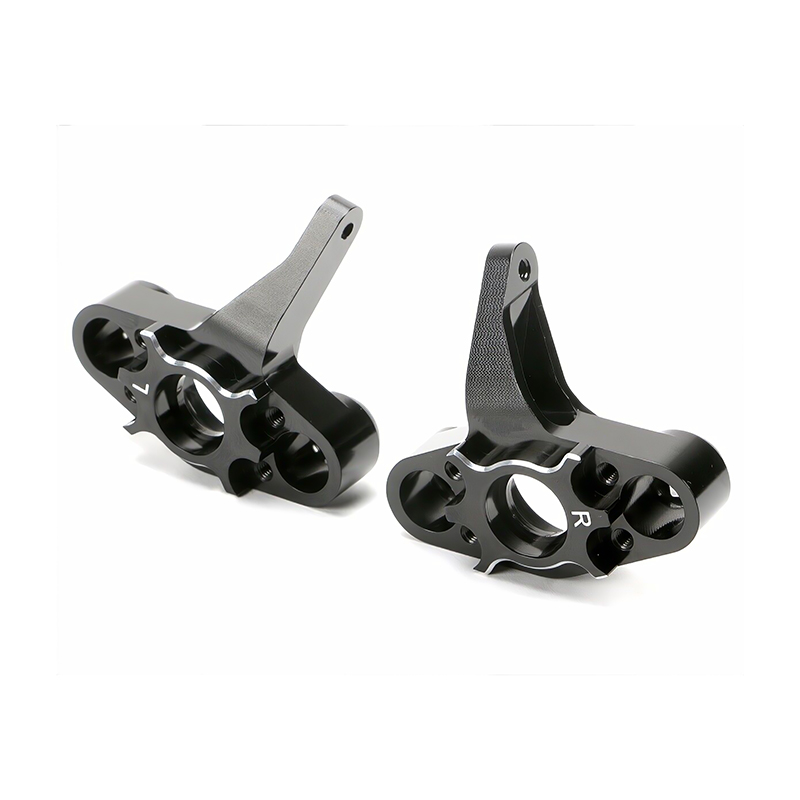
In today’s fast-paced manufacturing environment, precision and efficiency are paramount. One of the cornerstone technologies driving this progress is CNC machining and milling. Since its inception, CNC (Computer Numerical Control) machining has revolutionized production by automating the control of machine tools via computers, delivering unparalleled precision, versatility, and repeatability. This article explores the latest developments in CNC machining and milling processes, highlighting their impact across diverse industries, and illustrating how experienced service providers have leveraged these technologies to meet growing market demands.
### Understanding CNC Machining and Milling Processes
CNC machining is a manufacturing process in which pre-programmed computer software dictates the movement of factory tools and machinery. This process encompasses various operations such as milling, turning, grinding, prototyping, and surface finishing, enabling the production of complex components with tight tolerances. CNC milling, specifically, involves removing material from a workpiece using rotary cutters to create desired shapes and features.
The accuracy, speed, and repeatability offered by CNC machining and milling have made these processes invaluable for producing high-quality parts with consistency. Engineers and product designers rely on CNC machining to prototype new products, manufacture components in limited and large volumes, and handle intricate designs that are challenging to achieve manually.
### Evolution and Innovations in CNC Technology
Since its emergence, CNC machining technology has continuously evolved. Modern CNC machines integrate advanced computer-aided design (CAD) and computer-aided manufacturing (CAM) software allowing complex geometries to be translated seamlessly from digital models into physical parts. These advancements help reduce lead times and human error during production.
Additionally, multi-axis CNC machines capable of moving tools across five or even six axes simultaneously allow for more sophisticated cuts and reduce the need for repositioning the workpiece. This ensures higher precision and efficiency, especially crucial in industries like aerospace and medical devices where component integrity is critical.
Improvements in tooling, machine control systems, and materials compatibility further expand the scope and capabilities of CNC machining. Incorporating automation technologies such as robotic material handling and real-time quality control enables manufacturers to scale up production without compromising on quality.
### The Role of Precision CNC Machining Services
Precision CNC machining services have become essential partners for manufacturers across a variety of sectors. These services specialize in delivering consistently accurate components made from diverse materials including metals, plastics, and composites.
One such service provider, established in 2013, offers comprehensive CNC machining capabilities that include CNC milling, turning, grinding, prototyping, and complete surface finishing. Their work spans multiple industries, demonstrating the versatility and adaptability of CNC machined parts:
- **Automation**: CNC machined components form integral parts of automated machinery, where consistent precision is vital to maintaining uninterrupted operations.
- **Food Industry**: Hygienic and corrosion-resistant parts made via CNC milling ensure food processing equipment operates safely and efficiently.
- **Medical Sector**: Precision and compliance with strict tolerances in CNC machined parts enable the production of surgical instruments and implanted medical devices.
- **Electrical and Semiconductor**: Small, intricate parts produced with tight dimensional accuracy support the performance and reliability of electronic devices.
- **Oil and Gas**: Durable, high-strength CNC machined parts withstand harsh environmental conditions encountered in extraction and processing.
- **Aerospace and Agriculture**: Complex geometries and materials processed by CNC machining meet stringent standards for aircraft components and agricultural machinery.
- **Heavy Equipment**: Robust CNC fabricated parts ensure the durability and efficiency of construction and mining equipment.
By catering to such a broad range of industries, CNC machining services illustrate the adaptability and indispensability of these technologies in modern manufacturing.
### Prototyping and Surface Finishing: Extending the Benefits of CNC Machining
Beyond producing end-use parts, CNC machining plays a vital role in prototyping. Rapid prototyping enables designers to test and refine products before committing to mass production, saving both time and costs. This process helps identify design flaws early and facilitates iterative improvements.
Complete surface finishing services combined with CNC machining enhance the functional and aesthetic qualities of components. Finishing techniques such as polishing, anodizing, and coating improve corrosion resistance, surface smoothness, and wear characteristics, contributing to the longevity and performance of machined parts.
### Future Outlook: CNC Machining at the Forefront of Industry 4.0
As Industry 4.0 reshapes manufacturing, CNC machining processes are becoming more interconnected and intelligent. Integration of IoT (Internet of Things) sensors, data analytics, and AI-driven machine monitoring enhances predictive maintenance, reduces machine downtime, and optimizes production workflows.
Service providers embracing these technologies are positioned to deliver faster turnarounds, higher part quality, and greater customization – meeting the evolving needs of industries facing increasing complexity and competition.
### Conclusion
CNC machining and milling represent a fundamental pillar of modern manufacturing, offering precise, reliable, and versatile solutions for producing components across a vast array of industries. Continuous innovations in machine capabilities, software integration, and process automation drive ongoing improvements in efficiency and product quality.
Established precision CNC machining service providers with comprehensive manufacturing skills and multi-industry experience ensure clients can benefit from these advancements. By combining milling, turning, grinding, prototyping, and surface finishing, they deliver total solutions that support innovation, reduce time-to-market, and maintain competitive advantage.
As technological integration deepens and market demands grow, CNC machining will continue to be an indispensable tool for manufacturers seeking precision and performance in an increasingly complex world.