
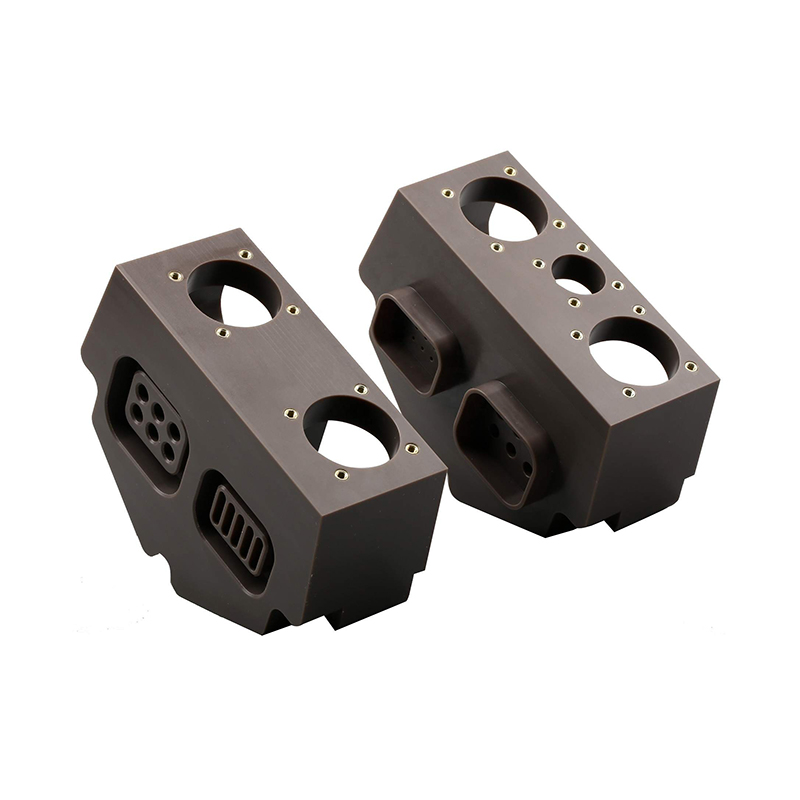
In recent years, the manufacturing industry has witnessed remarkable innovations that have reshaped the way products are designed and created. Among these, 3D printing and prototyping technologies have emerged as critical components complementing traditional manufacturing methods such as CNC machining. The integration of these technologies has enabled companies to achieve higher precision, faster turnaround times, and greater flexibility in product development, benefiting a broad range of industries.
Since its inception in 2013, a leading precision CNC machining provider has continuously expanded its capabilities to address the evolving needs of modern manufacturing. With expertise spanning CNC milling, CNC turning, CNC grinding, prototyping, and complete surface finishing, the company has solidified its position as a trusted partner across diverse sectors. These include automation, food processing, medical devices, electrical components, semiconductors, oil and gas, aerospace, agriculture, and heavy equipment manufacturing.
### The Rise of 3D Printing and Prototyping in Manufacturing
3D printing, also known as additive manufacturing, allows for the creation of complex geometries layer by layer directly from digital models. This contrasts with traditional subtractive methods like CNC machining, which involves removing material from a solid block to achieve the desired shape. The ability of 3D printing to rapidly produce prototypes and even end-use parts has transformed product development cycles, making them more efficient and cost-effective.
Prototyping, the process of creating a preliminary model of a product, benefits immensely from 3D printing. Design iterations that once required weeks or months with conventional methods can now be realized within days. This acceleration helps manufacturers identify design flaws early and optimize functionality before proceeding to mass production.
### Enhanced Precision Through Integration
While 3D printing offers unparalleled design freedom and rapid prototyping capabilities, it has limitations in terms of surface finish and mechanical properties compared to traditional machining. This is where the blend of 3D printing and precision CNC machining shines. Typically, manufacturers use 3D printing to produce initial prototypes or complex components with intricate internal features. Subsequently, precision CNC machining is employed to refine dimensions, achieve tighter tolerances, and perform surface finishing that meets rigorous industry standards.
The company has embraced this hybrid approach, leveraging the strengths of both technologies to deliver superior products. Their CNC machining services cover a broad spectrum, including milling, turning, and grinding operations capable of working with various materials from metals to plastics. By integrating prototyping services using 3D printing, the firm supports clients through every stage of product development.
### Serving Diverse Industries with Tailored Solutions
The versatility of combining 3D printing and CNC machining enables the company to cater to a wide array of industries. For example, in the medical field, producing custom implants, surgical instruments, and diagnostic devices requires not only precision but also rapid iteration and strict compliance with regulatory standards. The company’s advanced prototyping tools facilitate these demanding requirements, delivering components with exceptional detail and finish.
In aerospace and heavy equipment sectors, durability and precision are paramount due to the harsh operating environments. The company’s expertise in CNC grinding and surface finishing ensures that parts meet stringent quality criteria. When complex geometries are necessary, 3D printing aids in producing prototypes and even production parts that reduce weight without sacrificing strength.
Similarly, clients in the semiconductor and electrical component industries benefit from the ability to develop intricate parts quickly. The faster turnaround accelerates product launches to stay competitive in rapidly evolving markets, while precision machining guarantees functionality and reliability.
### Commitment to Quality and Innovation
From its founding in 2013, the company’s commitment to quality has been a cornerstone of its operations. Utilizing state-of-the-art CNC machines alongside the latest additive manufacturing tools, the firm continually invests in technology and personnel training. This ensures that each project, whether a one-off prototype or large production run, meets or exceeds customer expectations.
Collaboration is another key factor. The company works closely with clients to understand unique challenges and develop custom solutions. This client-centric approach, combined with technical expertise, allows the company to address complex engineering problems across diverse applications.
### Looking Ahead: The Future of Manufacturing
As 3D printing technologies continue to evolve—offering new materials, enhanced speed, and greater resolution—the synergy with traditional CNC machining will become even more critical. Companies adopting this dual approach can expect to reduce costs, improve product quality, and accelerate time to market.
Furthermore, innovations such as AI-driven design optimization, digital twins, and advanced simulation tools are beginning to complement manufacturing processes. This digital transformation is poised to create seamless workflows from initial concept through prototyping and final production, streamlining operations and reducing risks.
The company’s ongoing integration of cutting-edge 3D printing and prototyping with precision CNC machining perfectly positions it to capitalize on these trends. By maintaining a multidisciplinary focus and an unwavering dedication to quality, it continues to be a valuable partner for manufacturers across a broad industrial landscape.
### Conclusion
Incorporating 3D printing and prototyping alongside precision CNC machining presents a powerful combination that enhances manufacturing capabilities. The expanded services offered since 2013 demonstrate how traditional machining companies can successfully evolve by embracing new technologies. Serving industries ranging from aerospace to agriculture, this approach fosters innovation, improves efficiency, and drives superior product outcomes.
As manufacturing moves toward more customized, complex, and high-performance products, the collaboration of additive and subtractive techniques will remain a driving force behind successful development and production. This company exemplifies how blending these approaches meets the diverse needs of modern industry, ensuring it remains at the forefront of precision manufacturing.