
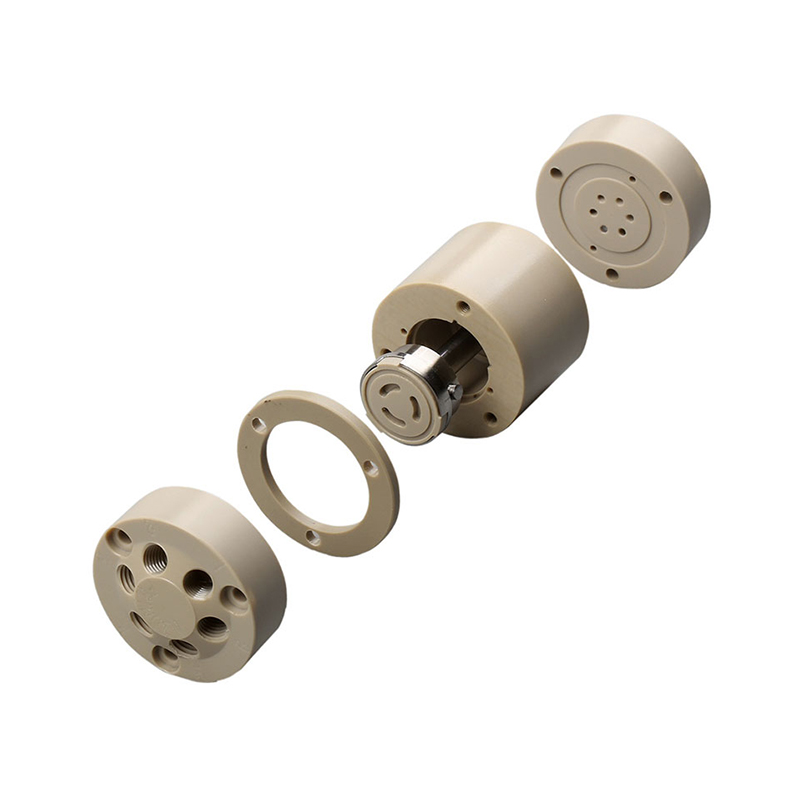
Since its inception, CNC (Computer Numerical Control) machining has revolutionized the manufacturing landscape by providing unparalleled precision, flexibility, and efficiency. As industries increasingly demand higher quality and faster turnaround, CNC machining continues to stand out as a preferred method for producing complex parts with exceptional accuracy. With over a decade of experience in precision CNC machining services—ranging from milling and turning to grinding, prototyping, and complete surface finishing—leading companies are catering to diverse sectors such as automation, food processing, medical devices, electrical components, semiconductors, oil and gas, aerospace, agriculture, and heavy equipment manufacturing. This article delves into the key advantages of CNC machining and its impact across various industries.
### Precision and Consistency
One of the most significant benefits of CNC machining is its ability to produce parts with exceptional precision and repeatability. Unlike manual machining, CNC machines operate based on computer-generated code that ensures every cut, drill, or mill is executed with the same level of accuracy. This precision is crucial in industries like aerospace and medical device manufacturing, where even minor deviations can lead to severe operational failures or compromised safety.
With CNC machining, manufacturers can maintain tight tolerances consistently, reducing the risk of defective parts and minimizing waste. This consistency also supports large-scale production runs, as every unit can be manufactured to exact specifications without the need for constant monitoring or adjustments.
### Flexibility in Manufacturing
CNC machining provides remarkable flexibility that benefits businesses needing both prototyping and full-scale production. The process accommodates a wide variety of materials including metals like aluminum, steel, and titanium, as well as plastics and composites. This versatility makes CNC machining suitable for creating complex, high-strength parts as well as lightweight components.
Industries such as the semiconductor and electrical components sectors often require rapid prototyping to innovate and adapt to ever-evolving technologies. CNC machining enables quick turnaround on prototypes, allowing companies to test and refine their designs without the lengthy delays associated with traditional manufacturing methods. Once a prototype is approved, production can seamlessly transition to batch or full-scale manufacturing without changing equipment or processes.
### Reduced Lead Times and Cost-Effectiveness
Traditional machining methods often involve longer lead times and higher labor costs due to manual adjustments, setup, and inspection. CNC machining streamlines the entire process by automating production with minimal human intervention. This automation translates to faster production cycles and reduced chances of human error.
In addition, the precision inherent in CNC operations results in less material waste and reduces the need for secondary finishing processes. For businesses in industries such as oil and gas or heavy equipment manufacturing, where large, intricate components are standard, this reduction in waste and finishing time can lead to substantial cost savings.
Moreover, the ability to program CNC machines for multiple operations means that complex parts requiring milling, turning, and grinding can often be produced in a single setup, reducing the number of times a part must be moved or re-fixed. This not only cuts down on production time but also enhances quality by minimizing the risk of misalignments.
### Enhanced Quality Through Advanced Surface Finishing
CNC machining is not limited to shaping parts but also extends to high-quality surface finishing. Complete surface finishing services, including polishing, grinding, and coating preparation, ensure that components meet the rigorous demands of various applications. For medical instruments, smooth and precise surface finishes are essential to meet hygiene standards and operational efficiency. Similarly, aerospace components require finishes that withstand extreme environmental conditions and stresses.
By integrating surface finishing within the CNC machining process, manufacturers can deliver parts that don’t just meet dimensional requirements but also satisfy aesthetic and functional surface conditions, reducing the need for outsourcing and improving supply chain efficiency.
### Support for Innovation and Complex Designs
Complex geometries that are difficult or impossible to produce by traditional machining can be efficiently manufactured with CNC technology. Multi-axis CNC machines allow for intricate cuts and shapes, facilitating the creation of innovative parts that push the boundaries of engineering.
Such capability is especially valuable in automation, aerospace, and agriculture sectors, where components often have irregular shapes and require integrated features such as slots, holes, and grooves in a single piece. CNC machining supports industry innovation by enabling designers and engineers to experiment with complex structures without compromising on reliability or manufacturability.
### Applications Across Diverse Industries
The advantages of CNC machining translate effectively to multiple industries:
- **Automation**: Custom components for machinery and robotics that require tight tolerances and rapid prototyping.
- **Food Processing**: Durable and hygienic parts for food handling and packaging equipment.
- **Medical**: Precision surgical instruments and implants that comply with strict regulatory standards.
- **Electrical Components**: Tiny, highly accurate parts necessary for reliable electronic devices.
- **Semiconductor**: Complex parts for chip manufacturing equipment needing exceptional precision.
- **Oil and Gas**: Robust, high-strength components for machinery operating under extreme conditions.
- **Aerospace**: Lightweight yet strong parts critical for aircraft safety and performance.
- **Agriculture and Heavy Equipment**: Large, durable components designed for harsh outdoor environments.
### Commitment to Quality and Service
Companies specializing in CNC machining have honed their expertise since the early 2010s to provide high-quality, precision manufacturing solutions. By covering all aspects of CNC services—including milling, turning, grinding, prototyping, and surface finishing—they offer comprehensive support tailored to client needs.
Their partnership with diverse industries attests to their capability in delivering parts that meet specialized requirements and regulatory standards. Whether it is a one-off prototype or a mass production order, CNC machining delivers reliability, efficiency, and precision.
### Conclusion
CNC machining represents a convergence of technology and manufacturing pragmatism, enabling industries to achieve higher quality, faster production, and greater design flexibility. Its broad impact across sectors such as aerospace, medical, and automotive highlights its vital role in modern manufacturing. With continuous advancements in CNC technology and expertise developed over years of delivering precision machining services, CNC machining stands as an indispensable tool for today’s manufacturing challenges.
By leveraging CNC machining’s many advantages, manufacturers can not only optimize costs and improve product quality but also drive innovation and maintain a competitive edge in their respective fields.