
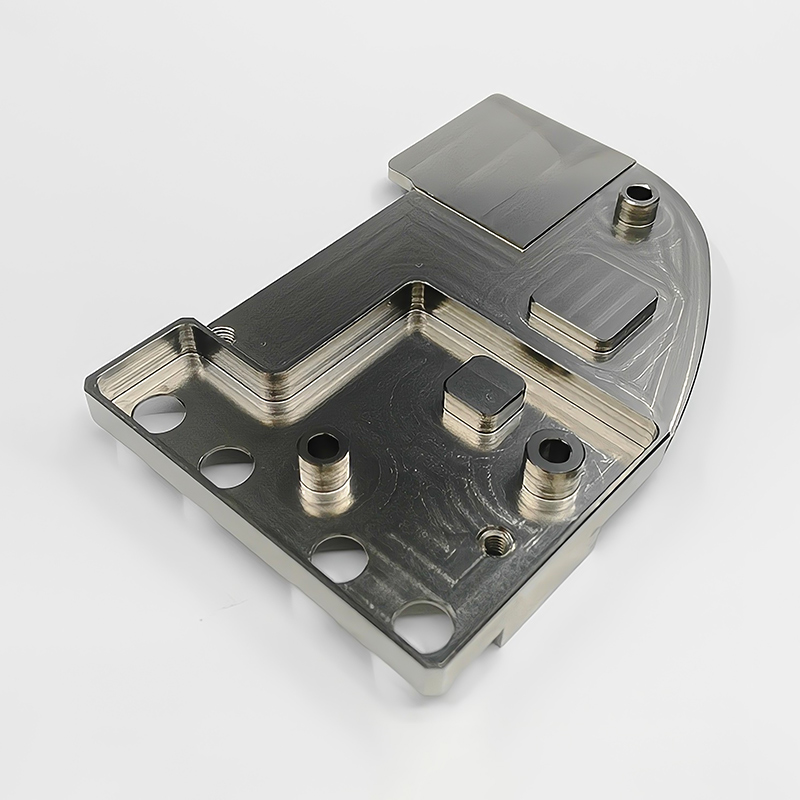
Since 2013, precision CNC machining has been at the forefront of advanced manufacturing solutions, playing a pivotal role in numerous industries by delivering highly accurate and reliable components. The evolution of CNC (Computer Numerical Control) machining has revolutionized production processes, enabling the creation of complex parts with exceptional precision and repeatability. Today, comprehensive CNC machining services encompass CNC milling, CNC turning, CNC grinding, prototyping, and complete surface finishing — each integral to meeting the exacting standards of diverse sectors.
### The Rise of Precision CNC Machining
Precision CNC machining has become indispensable in manufacturing due to its capacity for producing complex geometries with tight tolerances. This technology leverages computer-aided design (CAD) and computer-aided manufacturing (CAM) software to direct machinery, minimizing human error and maximizing efficiency. Since the early 2010s, companies specializing in precision CNC machining services have refined their capabilities, significantly impacting the speed and quality of manufacturing across various domains.
### Comprehensive CNC Machining Services
The scope of modern CNC machining extends beyond simple cutting or shaping. Key services include:
- **CNC Milling:** A versatile process involving rotating cutting tools to remove material from a workpiece while it is secured in place. It is essential for creating complex 3D shapes, slots, and holes.
- **CNC Turning:** In this method, the workpiece rotates while a cutting tool shapes it, ideal for producing cylindrical parts such as shafts, bushings, and threaded components.
- **CNC Grinding:** Critical for achieving ultra-fine surface finishes and precise dimensions, grinding uses an abrasive wheel to remove small amounts of material.
- **Prototyping:** Rapid production of prototypes allows for quick validation and iterative design improvements before mass production.
- **Complete Surface Finishing:** Finishing processes improve the aesthetic and functional properties of parts, including deburring, polishing, coating, and anodizing.
Such a comprehensive suite of services ensures the ability to address complex manufacturing needs efficiently and precisely.
### Serving a Broad Spectrum of Industries
The demands of various industries have intensified the need for reliable and precise CNC machining services. Notably, sectors benefiting from these advancements include:
- **Automation:** Automation equipment demands high-precision components that ensure reliable and repeatable performance under strenuous conditions. CNC machining delivers the necessary accuracy and consistency.
- **Food Industry:** Hygiene and safety standards require components with superior surface finishes and stability, which precision machining reliably provides for processing equipment and tooling.
- **Medical Sector:** Medical devices and instruments involve complex designs and biocompatible materials requiring exact specifications and traceability — capabilities well facilitated by CNC machining.
- **Electrical Components:** The need for miniaturized and intricate components in the electrical industry aligns perfectly with CNC machining’s capacity to produce finely detailed parts.
- **Semiconductor Industry:** Semiconductor manufacturing equipment demands high-precision parts to maintain cleanliness and operational accuracy, achievable through advanced CNC processes.
- **Oil and Gas:** Components used in harsh environments require rugged construction with tight tolerances, ensuring safety and reliability, which is attainable via precision machining.
- **Aerospace:** Aerospace components must meet stringent quality and performance specifications while often involving lightweight and complex geometries. CNC machining fulfills these rigorous requirements.
- **Agriculture and Heavy Equipment:** In these sectors, durable and precisely machined parts contribute to the longevity and efficiency of machinery, directly impacting productivity.
### Commitment to Quality and Innovation
Since its inception in 2013, companies offering precision CNC machining services have continuously enhanced their technological infrastructure and expertise. The integration of state-of-the-art machinery, computer control systems, and skilled technicians enables the delivery of consistently high-quality parts. Moreover, continuous investment in training and process optimization ensures adaptation to evolving industry standards and requirements.
The prototyping capability is a strategic advantage, allowing clients to accelerate product development cycles by verifying designs and function before committing to large-scale manufacturing. This iterative approach reduces costly errors and fosters innovation.
### Future Trends in CNC Machining
Looking ahead, several trends are expected to further boost the CNC machining landscape:
- **Integration of Artificial Intelligence (AI):** AI-driven programming and machine learning algorithms aim to optimize machining parameters, predict maintenance needs, and improve overall production efficiency.
- **Automation and Robotics:** Automation of CNC operations, including material handling and tool changes, increases throughput and reduces labor costs.
- **Advanced Materials Machining:** As industries evolve, machining of advanced materials such as composites, titanium alloys, and ceramics becomes more prevalent.
- **Sustainability Initiatives:** Efforts to reduce waste, utilize eco-friendly coolants, and enhance energy efficiency are increasingly prioritized in machining operations.
### Conclusion
Precision CNC machining services have firmly established themselves as critical enablers of modern manufacturing across a plethora of industries, ranging from aerospace to agriculture. With a comprehensive offering that spans milling, turning, grinding, prototyping, and finishing, these solutions provide the accuracy, reliability, and versatility demanded by today’s complex production environments.
The continuous evolution and adoption of advanced machining technologies ensure that manufacturers can meet the highest standards of quality and innovation, driving forward industrial progress. As the manufacturing landscape grows increasingly competitive and technologically sophisticated, reliance on precision CNC machining remains a cornerstone for success.