
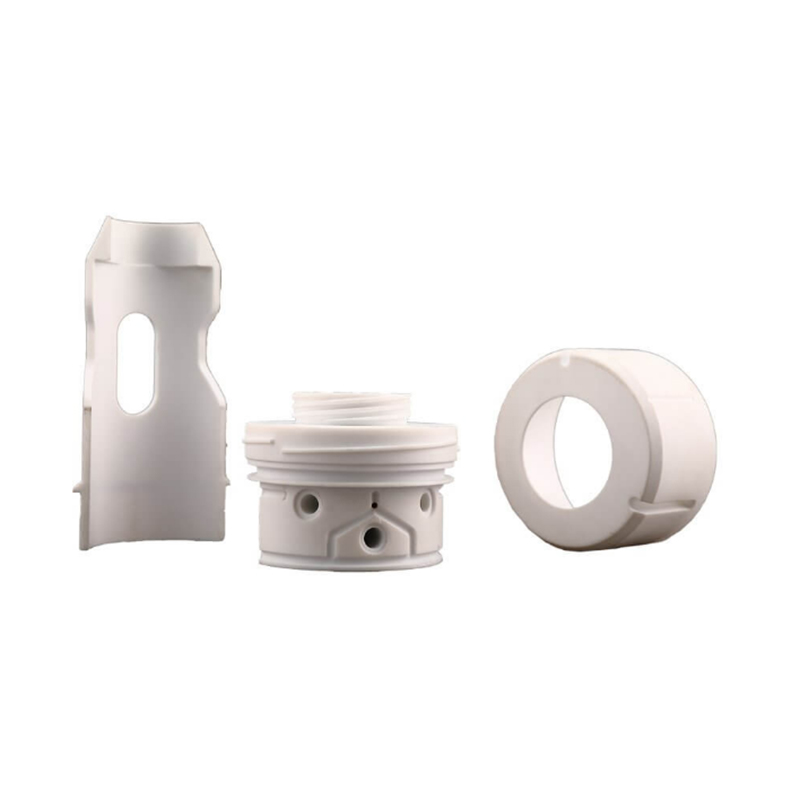
In today’s fast-evolving manufacturing landscape, rapid prototyping has emerged as a game-changer, enabling companies to accelerate product development and reduce time-to-market significantly. Integrating rapid prototyping with precision CNC machining services offers unprecedented advantages, providing industries with high-quality, reliable, and efficient solutions. One such company, Kachi, has been at the forefront of delivering precision CNC machining services since 2013, and its adoption of rapid prototyping technologies is further strengthening its capabilities across various sectors.
### The Role of Rapid Prototyping in Modern Manufacturing
Rapid prototyping refers to a group of techniques used to quickly fabricate a scale model or part using three-dimensional computer-aided design (CAD) data. Unlike traditional prototyping methods, which often involve lengthy and costly processes such as manual machining or molding, rapid prototyping uses advanced manufacturing technologies like additive manufacturing (3D printing), CNC machining, and other automated fabrication techniques to produce parts in a fraction of the time.
This approach enables engineers and designers to test form, fit, and function early in the product development cycle, identify potential design issues, and make necessary adjustments with minimal cost and lead time. The ability to quickly iterate designs not only speeds up innovation but also improves product quality and reduces production errors.
### Kachi’s Expertise in Precision CNC Machining Services
Established in 2013, Kachi has built a strong reputation for providing high-precision CNC machining services. The company’s comprehensive range of CNC machining services includes CNC milling, CNC turning, CNC grinding, prototyping, and complete surface finishing. These services cater to a diverse portfolio of industries such as automation, food processing, medical devices, electrical components, semiconductors, oil and gas, aerospace, agriculture, and heavy equipment manufacturing.
Kachi’s machining capabilities are supported by state-of-the-art equipment and a skilled workforce committed to stringent quality standards. The company’s focus on precision and reliability has allowed it to meet the complex and evolving needs of its clients, maintaining a competitive edge in a demanding market.
### Synergizing Rapid Prototyping with CNC Machining
By integrating rapid prototyping technologies into its existing precision CNC machining operations, Kachi is able to offer enhanced benefits to its customers. One of the key advantages is the seamless transition from prototype development to full-scale production. Rapid prototyping allows for the creation of functional samples that can be tested under real-world conditions, ensuring that designs are fully validated before committing to large batch manufacturing.
This integration also fosters greater flexibility in materials and processes. While 3D printing is excellent for creating complex geometries and lightweight parts, CNC machining provides superior surface finishes, tighter tolerances, and better material strength. Combining these approaches enables Kachi to optimize the manufacturing process based on project requirements, balancing speed, cost, and quality.
### Industry Applications Benefiting from the Combined Approach
Kachi’s customers across a range of industries are leveraging rapid prototyping alongside precision CNC machining to improve product development cycles and reduce production bottlenecks.
- **Automation Industry:** Rapid prototyping aids in designing and testing custom tooling and components that must operate with precision and resilience under demanding conditions. CNC machining ensures these parts meet tight tolerances essential for automation systems.
- **Medical Sector:** In healthcare, the timely delivery of bespoke medical components can be critical. Rapid prototyping allows quick iterations for complex parts used in surgical tools and diagnostic equipment, while CNC machining guarantees biocompatible materials and meticulously finished products.
- **Semiconductor Manufacturing:** The semiconductor industry demands highly precise parts for equipment used in chip fabrication. Combining rapid prototyping with CNC machining ensures rapid design validation and high-fidelity parts that meet strict industry standards.
- **Aerospace and Heavy Equipment:** Both sectors prioritize strength, durability, and precision. Prototyping accelerates the evaluation of new designs under extreme conditions, while CNC machining delivers the robust, finished components essential for operational safety and performance.
### Commitment to Quality and Customer Satisfaction
Kachi has consistently maintained its commitment to quality by investing in advanced machinery, training personnel, and implementing rigorous quality control processes. The company’s adherence to international standards gives clients confidence that every part produced will meet or exceed specifications.
The integration of rapid prototyping further supports Kachi’s mission by enabling quicker design cycles, reducing waste, and improving communication with clients through tangible prototypes. This collaborative approach ensures that customer requirements are fully understood and incorporated early in the production process.
### Looking Ahead: Innovation and Growth
As manufacturing technologies continue to evolve, the synergy between rapid prototyping and precision CNC machining will become increasingly critical. Companies like Kachi are well-positioned to lead this transformation by continually embracing new technologies and refining their expertise.
Future advancements in materials science, automation, and digital manufacturing will likely expand the capabilities of both rapid prototyping and CNC machining. The ability to produce complex, high-performance components swiftly and cost-effectively will unlock new possibilities for product design and industrial innovation.
### Conclusion
The integration of rapid prototyping with precision CNC machining services represents a significant advancement in the manufacturing sector. Through this approach, Kachi has enhanced its ability to serve diverse industries requiring high-quality, precise, and customizable components. By reducing development time and improving product reliability, Kachi continues to support its customers in achieving competitive advantages while driving innovation forward.
As rapid prototyping technologies advance and further integrate with traditional machining processes, the future of manufacturing promises even greater efficiency, flexibility, and precision—benefiting industries and end users worldwide. Kachi’s continued dedication to excellence ensures that it remains a trusted partner in this dynamic environment.