
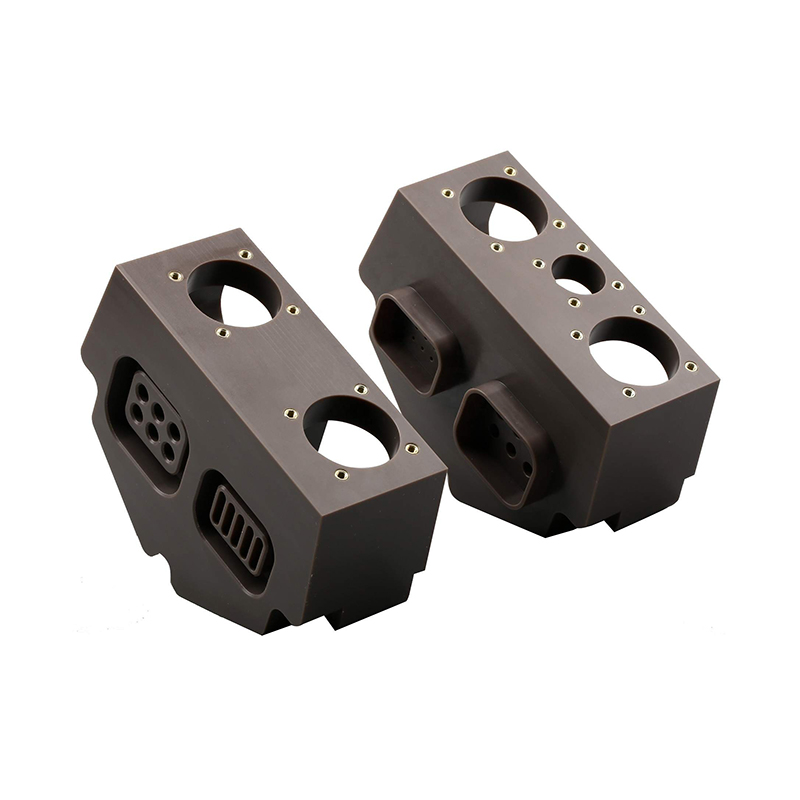
Since its inception in 2013, the precision CNC machining industry has seen significant growth and diversification, offering advanced manufacturing solutions to a broad range of sectors. With capabilities spanning CNC milling, CNC turning, CNC grinding, prototyping, and comprehensive surface finishing, these services have become integral to the manufacturing processes in industries such as automation, food, medical, electrical components, semiconductor, oil and gas, aerospace, agriculture, and heavy equipment.
### The Evolution and Importance of Precision CNC Machining
Computer Numerical Control (CNC) machining has revolutionized modern manufacturing by enabling the creation of highly accurate and complex components with minimal human intervention. CNC machining uses computer software to control machine tools, allowing for unparalleled precision, repeatability, and efficiency. Over the past decade, the advancement in CNC technology has allowed manufacturers to meet increasingly stringent quality requirements while reducing lead times and waste, crucial in today's competitive market environment.
Since 2013, companies specializing in precision CNC machining have expanded their offerings to cover a comprehensive array of machining processes. These include:
- **CNC Milling:** Utilizes rotary cutters to remove material from a workpiece, creating intricate shapes and surfaces with exceptional accuracy.
- **CNC Turning:** Involves rotating a workpiece as cutting tools shape it, ideal for symmetrical parts such as shafts and cylindrical components.
- **CNC Grinding:** A finishing process that enhances the surface finish and dimensional accuracy of machined parts.
- **Prototyping:** Rapid production of prototype components to test fit, form, and function before mass production.
- **Complete Surface Finishing:** Processes to improve the appearance, durability, and performance of the final product, including polishing, anodizing, and coating.
### Serving Diverse and Demanding Industries
The versatility and precision of CNC machining make it indispensable in several key industries:
#### Automation Industry
The automation sector relies heavily on precision components to ensure the reliability and efficiency of robotic systems and automated machinery. CNC machined parts provide the tight tolerances and complex geometries necessary for actuators, sensor housings, and custom fixtures that make automated systems function seamlessly.
#### Food Industry
In food processing, CNC machining contributes to the manufacture of sanitary and high-quality components such as valve bodies, nozzles, and conveyor parts. Precision machining assures that parts meet strict hygiene standards and fit perfectly within complex processing lines.
#### Medical Industry
The medical field demands components with biocompatibility and extreme precision, often crafted from specialized materials like titanium and stainless steel. CNC machining delivers intricate parts for surgical instruments, implants, diagnostic devices, and laboratory equipment, which are vital for patient safety and effective treatment.
#### Electrical Components
From connectors and housings to custom circuit boards and heat sinks, the electrical components industry benefits from CNC machining to produce exact parts that meet tight electrical and thermal specifications. This ensures optimal performance and longevity of electronic devices.
#### Semiconductor Industry
As semiconductor manufacturing requires ultra-precise components for fabrication equipment, CNC machined parts must conform to extremely fine tolerances and complex shapes. The reliability of these components directly affects wafer processing and overall equipment effectiveness.
#### Oil and Gas Sector
The harsh environments encountered in oil and gas exploration and production necessitate durable, high-performance parts. CNC machining is used to produce critical components such as valves, pumps, and structural parts that must withstand high pressure, temperature extremes, and corrosive substances.
#### Aerospace Industry
Aircraft and spacecraft manufacturing set the highest standards for precision, traceability, and material performance. CNC machining supports the production of fuel system components, engine parts, structural elements, and interior fittings, each engineered to minimize weight while maximizing strength and safety.
#### Agriculture and Heavy Equipment
In agriculture and heavy machinery, CNC machining provides components like hydraulic fittings, gears, and chassis parts that require robustness and reliability in rugged operating conditions. Precision machining reduces downtime and maintenance costs by ensuring high-quality, long-lasting parts.
### Innovation and Quality Assurance
To keep pace with the demands of these diverse industries, CNC machining providers continuously invest in cutting-edge machinery and technology. Advanced multi-axis CNC machines allow for the production of complex geometries in a single setup, reducing error and increasing efficiency.
Furthermore, quality assurance remains a cornerstone of precision CNC services. Modern CNC shops employ rigorous inspection protocols using Coordinate Measuring Machines (CMM), laser scanners, and other metrology tools to verify dimensional accuracy and adherence to specifications. These quality control measures ensure that every part leaving the facility meets or exceeds customer expectations.
### Economic and Environmental Impact
The expansion of precision CNC machining services also contributes positively to economic growth by enabling local manufacturing, creating skilled jobs, and supporting supply chain resilience. Environmentally, CNC machining is increasingly adopting sustainable practices such as optimized material usage, recycling of scrap metal, and energy-efficient operations to reduce its ecological footprint.
### Future Outlook
As industries evolve with emerging technologies like Industry 4.0, artificial intelligence, and additive manufacturing, precision CNC machining is set to integrate more smart processes for real-time monitoring, adaptive control, and enhanced customization. This integration promises to further improve quality, reduce costs, and accelerate time-to-market for critical components.
In conclusion, since 2013, precision CNC machining services have played a vital role in advancing manufacturing capabilities across a wide spectrum of industries. By delivering high-precision, reliable, and versatile solutions, they continue to empower companies to innovate and excel in a rapidly changing global marketplace.