
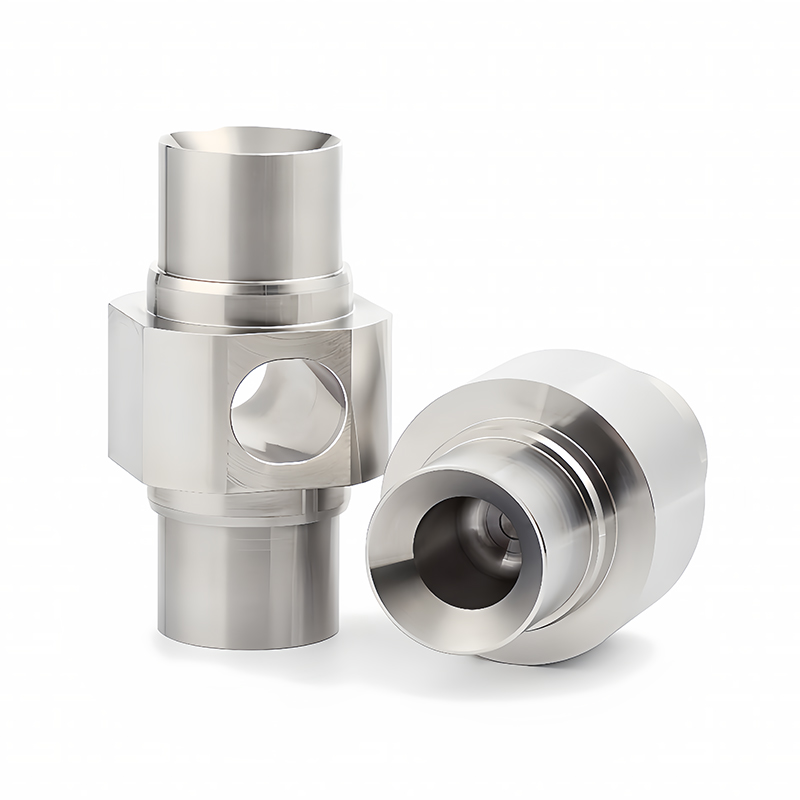
In today’s fast-evolving industrial landscape, precision and efficiency remain at the forefront of manufacturing priorities. CNC lathe components, integral to the CNC machining process, play a crucial role in ensuring that manufacturers meet these demands across a broad spectrum of industries. With advancements in technology and machining capabilities, CNC lathe components have transformed from simple tools into highly sophisticated parts essential for producing complex geometries with unparalleled accuracy.
### Understanding CNC Lathe Components
CNC (Computer Numerical Control) lathe components are the building blocks of CNC turning machines. These components range from the spindle, chuck, turret, and tool holders to the bed, ways, and control systems. Each piece supports the lathe’s function to rotate a workpiece while stationary cutting tools shape it into the desired form. The synergy of these components ensures smooth operation, minimal error, and high repeatability — critical factors for industries demanding exacting tolerances.
The demand for high-quality CNC lathe components has surged as manufacturing processes increasingly rely on automation and precision machining. These components must withstand rigorous operational cycles, maintain alignment, and deliver steady performance. Improvements in materials, design, and surface finishing techniques have collectively raised the bar on the standards expected from these components.
### Expertise in CNC Machining Services
Companies specializing in precision CNC machining services have been pivotal in pushing the boundaries of what is achievable in manufacturing. For instance, since 2013, a precision machining provider has been offering comprehensive CNC services, including CNC milling, CNC turning, CNC grinding, rapid prototyping, and complete surface finishing. Their expertise spans multiple industries such as automation, food processing, medical devices, electrical components, semiconductors, oil and gas, aerospace, agriculture, and heavy machinery.
This versatility is a testament to the precision and reliability of their manufactured parts. By providing prototyping and full-scale production capabilities, they enable clients to take innovative designs from concept to market-ready products efficiently. Their focus on precision ensures components meet stringent quality specifications, whether producing a batch of delicate medical implants or heavy-duty agricultural machinery parts.
### The Role of CNC Lathe Components Across Industries
The importance of CNC lathe components is evident across diverse industry sectors:
- **Automation:** In highly automated production lines, components machined on CNC lathes are often integral parts of robotic arms, transport mechanisms, and control devices that require high precision.
- **Food Industry:** CNC machining provides hygienic and corrosion-resistant components used in food processing equipment, complying with strict safety standards.
- **Medical Field:** The manufacture of medical devices demands precision down to microns. CNC lathe components ensure safe, reliable, and repeatable parts for surgical instruments, implants, and diagnostic equipment.
- **Electrical and Semiconductor:** These sectors rely on components with intricate designs and fine tolerances. CNC lathe components ensure functionality in electrical connectors, semiconductor handling tools, and sensor housings.
- **Oil and Gas:** Machines operating in harsh environments require parts that can withstand extreme pressure and temperature variations. CNC lathes deliver parts with durable material properties such as heavy equipment components and pipeline fittings.
- **Aerospace:** Aerospace parts demand superior strength-to-weight ratios and precision. CNC lathe components contribute to engine parts, landing gear components, and structural elements that meet strict regulatory standards.
- **Agriculture and Heavy Equipment:** Durability and robustness are key for parts used in tractors, harvesters, and construction vehicles. CNC machining improves wear resistance and longevity of these components.
### Advancements in Surface Finishing and Prototyping
Modern CNC machining companies don’t just stop at shaping and cutting; comprehensive surface finishing techniques have become a vital part of the manufacturing chain. Surface finishing processes such as polishing, grinding, anodizing, plating, and coating enhance the performance and lifespan of CNC lathe components by improving corrosion resistance, reducing friction, and delivering the desired aesthetic appearance.
Prototyping services further augment the manufacturing process by enabling rapid iteration. Engineers can test and refine designs quickly before committing to mass production, reducing costs and time-to-market. High-precision CNC machining coupled with prototyping provides clients a competitive edge in innovation and quality assurance.
### Quality Assurance and Customer-Centric Approach
A commitment to quality is non-negotiable in precision machining. Leading service providers implement rigorous quality control measures, including dimensional inspections, material certifications, and adherence to industry standards. By integrating customer feedback and leveraging advanced inspection technologies like coordinate measuring machines (CMM), companies ensure their components consistently meet or exceed expectations.
Moreover, the ability to work closely with clients from prototype development through full production fosters a collaborative environment that aligns product performance with end-user requirements. Flexibility in handling custom orders and complex geometries showcases the capabilities of modern CNC machining firms.
### Future Trends in CNC Lathe Components Manufacturing
The CNC machining industry is on the verge of continuous innovation driven by technological advancements such as:
- **Automation and Smart Machining:** Integration of IoT and AI allows CNC lathes to self-optimize, detect tool wear, and reduce downtime.
- **Advanced Materials:** The use of exotic alloys, composites, and heat-resistant materials expands component applications.
- **Additive Manufacturing Hybridization:** Combining additive and subtractive processes offers new design freedoms and reduces waste.
As these trends gain momentum, CNC lathe components will evolve further to support the next generation of manufacturing challenges.
### Conclusion
CNC lathe components remain fundamental to precise and efficient manufacturing across numerous industries. Supported by expert machining services that deliver everything from prototyping to polished final parts, these components contribute significantly to the functionality, durability, and quality of the end products. Firms providing comprehensive CNC machining services since 2013 have demonstrated how precision engineering and customer-focused approaches can meet the ever-increasing demands of today’s industrial environment — from automation and aerospace to agriculture and beyond.
With ongoing innovations and commitment to quality, the future of CNC lathe components in manufacturing looks promising, paving the way for safer, smarter, and more efficient production processes worldwide.