
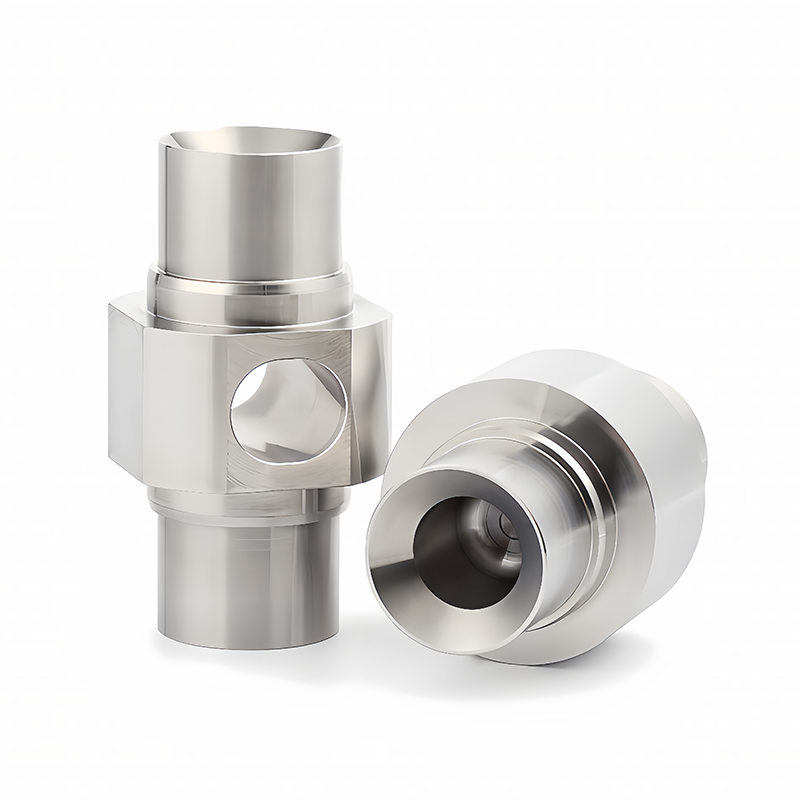
In recent years, CNC machining automation has revolutionized manufacturing processes across multiple sectors by enhancing precision, reducing production times, and lowering operational costs. Since its inception, the automation of Computer Numerical Control (CNC) machining processes has become a vital component for industries seeking to maintain competitive advantage through scalability and quality assurance. The integration of advanced automation technologies not only streamlines complex machining operations but also enables manufacturers to meet the increasing demands for custom and small-batch production efficiently.
A leading example within this evolving landscape is a precision machining company that has been delivering high-quality CNC machining services since 2013. The company’s comprehensive capabilities include CNC milling, CNC turning, CNC grinding, prototyping, and complete surface finishing. Serving a wide array of industries such as automation, food processing, medical devices, electrical components, semiconductor manufacturing, oil and gas, aerospace, agriculture, and heavy equipment, the firm is emblematic of how automated CNC machining has permeated diverse market segments.
### Transformative Impact on Manufacturing
The automation of CNC machining has shifted the manufacturing paradigm, where manual intervention is minimized, and computer-driven precision shapes the entirety of the production process. Automated CNC machinery, equipped with advanced software and robotics, can operate continuously with minimal human supervision. This shift greatly reduces errors caused by manual handling and inconsistency, ensuring products meet exact design specifications.
For companies providing precision machining services, automation affords the ability to undertake complicated machining tasks with exceedingly tight tolerances. This is particularly critical in sectors such as aerospace and medical device manufacturing, where even microscopic deviations can compromise safety and functionality. The automated CNC processes ensure reproducibility, batch-to-batch consistency, and adherence to stringent quality standards.
### Diverse Industry Applications
The breadth of industries benefiting from CNC machining automation showcases its versatility and importance. In the automation industry itself, precision components manufactured through CNC machining are integral to developing reliable robotic systems and machinery. Similarly, the medical field relies heavily on precisely machined parts for surgical instruments and implants, where biocompatibility and exact dimensions are essential.
Electrical and semiconductor sectors utilize CNC machining to produce components such as connectors, housings, and intricate chip carriers. The oil and gas industry demands robust machined parts capable of withstanding harsh environments, while aerospace applications require lightweight yet sturdy components produced with high precision to meet regulatory and safety requirements.
Agriculture and heavy equipment industries leverage CNC-machined parts for large-scale machinery and tools that improve operational efficiency and durability, highlighting CNC machining’s role beyond just high-tech sectors.
### Comprehensive Service Offering
The machining service provider underscores the importance of offering end-to-end solutions, combining multiple machining processes under one roof. Starting with prototyping, the company assists clients in rapid product development cycles by delivering functional models that help validate designs before mass production. This iterative feedback loop accelerates time-to-market and reduces waste.
CNC milling and turning form the backbone of the manufacturing operations, producing complex geometries and intricate shapes. CNC grinding further enhances surface finishes and dimensional accuracy, essential for functional and aesthetic requirements. The final stage of complete surface finishing not only improves the product’s appearance but also adds protective coatings or treatments that extend the lifespan and performance in challenging environments.
### Emphasis on Quality and Innovation
Quality control remains a cornerstone of CNC machining automation. Automated inspection systems integrated within CNC machines detect deviations in real-time, enabling immediate corrections and decreasing the probability of defective parts progressing through the production line. This proactive approach to quality management helps manufacturers maintain the trust of industries with zero tolerance for errors, such as aerospace and medical.
Innovation in CNC automation continually pushes the boundaries of what’s achievable. Incorporating artificial intelligence (AI) and machine learning algorithms, machines can now predict maintenance needs, optimize cutting strategies, and enhance overall operational efficiency. Such advancements translate to higher throughput, less downtime, and better utilization of raw materials.
### Meeting Industry Challenges
The growing complexity and customization demands of modern manufacturing present challenges that automated CNC machining adeptly addresses. Unlike traditional mass production methods, flexible CNC machining automation can handle small batch sizes, customized orders, and rapid design changes without significant setup time or costs. This agility is vital for sectors like semiconductors and medical devices, where product iterations and technological innovations happen rapidly.
Furthermore, the integration of automation aligns with sustainability goals by reducing material waste and energy consumption through precision cutting and process optimization. As environmental regulations tighten, such efficiencies become indispensable for manufacturers wishing to minimize their ecological footprint.
### Future Outlook
Looking ahead, CNC machining automation is poised to become even more sophisticated with advancements in digital manufacturing technologies such as Industry 4.0 and the Internet of Things (IoT). Smart factories equipped with interconnected CNC machines will enable seamless data exchange, predictive analytics, and adaptive manufacturing processes.
For companies actively serving multiple industries—including automation, food, medical, electrical components, semiconductor, oil and gas, aerospace, agriculture, and heavy equipment—the continued evolution of CNC machining automation will mean staying at the forefront of innovation while delivering superior quality and reliability.
### Conclusion
CNC machining automation is a transformative force in manufacturing, driving enhanced precision, efficiency, and flexibility across a multitude of industries. Service providers with extensive expertise in CNC milling, turning, grinding, prototyping, and surface finishing exemplify how automated machining solutions meet the diverse and stringent needs of today’s market. As technology advances, the integration of AI, IoT, and smart manufacturing will further solidify CNC machining automation as an essential pillar of modern industrial production, empowering manufacturers to innovate, compete, and succeed on a global scale.